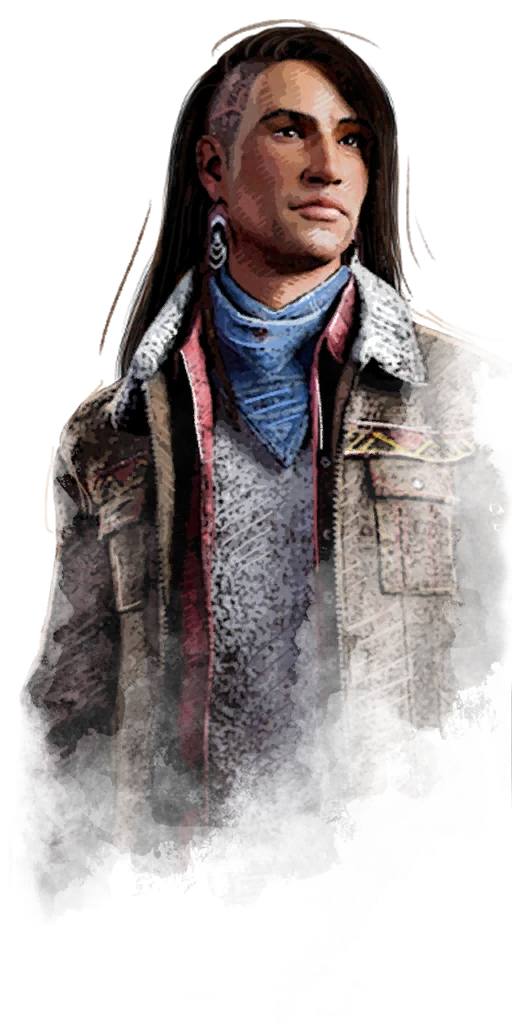
Shane Wiigwaas
Base Info
- ChapterThe Life Road Chapter
Perks

Feature
Shane Wiigwaas follows his own road, hoping to atone for his past mistakes.
His personal perks, Wide Open Throttle, Lend a Hand, and Cross-Examination, allow him to reset dropped pallets, give permanent healing charges, and see Light Marks left behind by the Killer.
His personal perks, Wide Open Throttle, Lend a Hand, and Cross-Examination, allow him to reset dropped pallets, give permanent healing charges, and see Light Marks left behind by the Killer.
Story
Shane "Giiwewigaabaw" Wiigwaas grew up learning that “justice” meant different things to different people. For most, “justice” was synonymous with “punishment.” Do something wrong, you get sent to prison, end of story. But for the Anishinaabek of Glass River First Nation, and for Peoples across Turtle Island, “justice” meant “balance.” Do something wrong, you do what you can to make it right. To restore balance.
This guiding principle defined his career as a defense attorney, advocating for First Nations clients in the courtroom. In a system that funneled offenders to prison for even minor convictions, Shane was a disruption; by giving each case the care and attention it deserved, Shane saved many clients from serving unnecessary jail time.
But everything changed with just one case.
Derek was the youngest of Shane’s many cousins. The one he spent the most time playing with as a young boy. They grew up together, even got into trouble together. But Derek was always sweet and good-natured, the beat of his mother’s heart. Now he was in a jail cell, charged with murdering a police officer.
Shane took the case without question and listened as Derek shared his side of the story. It was a typical traffic stop. Derek’s taillight wasn’t working. The officer escalated things, ultimately dragging Derek out of his car and into the roadside ditch.
Derek fought back in self-defense when suddenly, the cop disappeared in a black fog.
Shane knew his cousin was innocent, but what he needed was evidence. Nothing at the crime scene helped Derek’s case. Crown prosecution was confident: even without the officer’s body, the broken glass and bloody tracks were enough to convince a jury that Derek was guilty. Worse still, the police union was calling for the most severe sentence: life in prison without parole.
Shane couldn’t let that happen. He also knew he couldn’t stand before a jury telling stories of a strange black fog. Prosecution was open to a plea deal. A lesser felony would still mean a prison sentence, but only a few years instead of life.
Derek refused. A plea deal meant admitting to a crime that he didn’t commit. Shane tried to reason with him, but the damage was done. Convinced that Shane didn’t believe his story, Derek dismissed him as his attorney. He would represent himself in court if he had to.
Sure enough, Derek was convicted of murder and sentenced to life without parole. His family, and the people of Glass River, were devastated.
Shane stopped visiting home. His aunt, Derek’s mom, stopped talking to him. Friends and neighbors suddenly looked at Shane like an outsider. The nightmares were relentless, visions of Derek suffering behind bars. And Shane knew why.
He should’ve fought the case in court. He should’ve been there for his cousin. Now, there was only one way forward.
In the morning light, Shane got on his motorcycle and left home, family, everything he held dear, behind.
For years, Shane moved from town to town, reserve to reserve. He gave legal aid to protestors in Alberta. He was a ranch hand in Montana. He fixed homes in Oklahoma. But whenever the nightmares returned, Shane knew it was time to move on.
Sometimes he told Derek’s story to those who would listen. Sometimes he even dared mention the black fog. It was on one such night in Minnesota, camped out for the upcoming Sun Dance, that a Dakota woman took Shane aside.
She, too, had heard of someone taken by black fog. A young man in the Appalachians.
He set out before sunrise. If there was a chance of finding something that could get Derek out of prison, Shane was going to take it.
His investigation lead to Georgia. He learned of a young man named Jake who lived deep in the woods of Blood Mountain, where locals knew not to go.
Shane left his motorcycle behind. He hiked the mountain trail and ventured into the woods where Jake was last seen. Time seemed to slip away. Shane kept walking, deeper and deeper into the forest, until he came to an unnatural clearing. The air was thick with decay. The ground at his feet was black and rotten. The dead land awoke at his presence, sending vibrations that made Shane sick to his stomach.
And from that clearing came the black fog.
Before his eyes, Shane saw a sea of faces. A bloodied cop terrified for his life. A young man – Jake – running. Countless people from across time and space, trapped together, looking for help.
Looking for someone to save them.
This guiding principle defined his career as a defense attorney, advocating for First Nations clients in the courtroom. In a system that funneled offenders to prison for even minor convictions, Shane was a disruption; by giving each case the care and attention it deserved, Shane saved many clients from serving unnecessary jail time.
But everything changed with just one case.
Derek was the youngest of Shane’s many cousins. The one he spent the most time playing with as a young boy. They grew up together, even got into trouble together. But Derek was always sweet and good-natured, the beat of his mother’s heart. Now he was in a jail cell, charged with murdering a police officer.
Shane took the case without question and listened as Derek shared his side of the story. It was a typical traffic stop. Derek’s taillight wasn’t working. The officer escalated things, ultimately dragging Derek out of his car and into the roadside ditch.
Derek fought back in self-defense when suddenly, the cop disappeared in a black fog.
Shane knew his cousin was innocent, but what he needed was evidence. Nothing at the crime scene helped Derek’s case. Crown prosecution was confident: even without the officer’s body, the broken glass and bloody tracks were enough to convince a jury that Derek was guilty. Worse still, the police union was calling for the most severe sentence: life in prison without parole.
Shane couldn’t let that happen. He also knew he couldn’t stand before a jury telling stories of a strange black fog. Prosecution was open to a plea deal. A lesser felony would still mean a prison sentence, but only a few years instead of life.
Derek refused. A plea deal meant admitting to a crime that he didn’t commit. Shane tried to reason with him, but the damage was done. Convinced that Shane didn’t believe his story, Derek dismissed him as his attorney. He would represent himself in court if he had to.
Sure enough, Derek was convicted of murder and sentenced to life without parole. His family, and the people of Glass River, were devastated.
Shane stopped visiting home. His aunt, Derek’s mom, stopped talking to him. Friends and neighbors suddenly looked at Shane like an outsider. The nightmares were relentless, visions of Derek suffering behind bars. And Shane knew why.
He should’ve fought the case in court. He should’ve been there for his cousin. Now, there was only one way forward.
In the morning light, Shane got on his motorcycle and left home, family, everything he held dear, behind.
For years, Shane moved from town to town, reserve to reserve. He gave legal aid to protestors in Alberta. He was a ranch hand in Montana. He fixed homes in Oklahoma. But whenever the nightmares returned, Shane knew it was time to move on.
Sometimes he told Derek’s story to those who would listen. Sometimes he even dared mention the black fog. It was on one such night in Minnesota, camped out for the upcoming Sun Dance, that a Dakota woman took Shane aside.
She, too, had heard of someone taken by black fog. A young man in the Appalachians.
He set out before sunrise. If there was a chance of finding something that could get Derek out of prison, Shane was going to take it.
His investigation lead to Georgia. He learned of a young man named Jake who lived deep in the woods of Blood Mountain, where locals knew not to go.
Shane left his motorcycle behind. He hiked the mountain trail and ventured into the woods where Jake was last seen. Time seemed to slip away. Shane kept walking, deeper and deeper into the forest, until he came to an unnatural clearing. The air was thick with decay. The ground at his feet was black and rotten. The dead land awoke at his presence, sending vibrations that made Shane sick to his stomach.
And from that clearing came the black fog.
Before his eyes, Shane saw a sea of faces. A bloodied cop terrified for his life. A young man – Jake – running. Countless people from across time and space, trapped together, looking for help.
Looking for someone to save them.